 Crahift
£470 to £590, four weeks
A 1980s road bike brought back
The owner's father's bike, out of a garage after twenty years. They wanted it rideable rather than perfect, and the most useful thing we did was talk them out of a respray.
 £470 to £590
 Four weeks
The brief
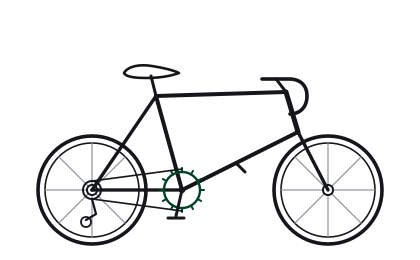
A steel road bike from the mid 1980s that had been in a garage since the late nineties. The owner had inherited it and wanted to ride it, not put it on a wall.
The frame was straight and the paint was faded with a few chips and one long scratch along the top tube. Everything rubber or fabric on it had perished. The wheels were filthy but true.
They asked us for a full restoration, including a respray. We did about half of that, and it cost them roughly half of what they had braced for.
What we chose, and why
We talked them out of the respray
A good respray on a frame like this costs more than everything else on this page put together, and it would have removed the original transfers and the marks that make it their father's bike rather than a 1980s bike.
We cleaned and polished the original paint, touched in the worst chips, and left the scratch. It looks like a well kept forty year old bike, which is what it is. The owner has since told us this was the right call, and it is the advice we would give again.
Brake pads, which is the actual safety story
Forty year old brake rubber goes hard and glazed. It looks fine and it barely works, and in the wet it is genuinely dangerous. New cartridge pads in the original calipers transformed the bike more than any other single part.
If you are bringing an old bike back and you only do one thing, do this one. It costs very little and it is the difference between a bike you can ride in traffic and one you cannot.
Everything perishable, replaced
Cables and outers, chain, freewheel, tyres, tubes, rim tape, bar tape and brake pads. All of it had gone hard or brittle. None of it is visible in a photograph and all of it is why the bike works.
We also stripped and repacked the bottom bracket and hub bearings. The grease in them had turned to a wax.
We kept the five speed freewheel
There was a conversation about modernising the gearing. We did not, for two reasons. The original friction down tube shifters work perfectly and will keep working for another forty years, because there is almost nothing in them to fail. And five speed freewheels and chains are still available.
Modernising would have meant a new rear wheel, new shifters, new derailleur, new chain, and a bike that was no longer really the same bike. It would also have roughly doubled the bill.
The original wheels, kept
We cleaned them, replaced one broken spoke, and re tensioned and trued both. The rims had plenty of brake track left. They are heavy by modern standards and completely fine.
What it cost
Parts came to £190 to £310, with the spread mostly in the tyres and freewheel. Our labour was £280, which covered the full strip, the bearing work, the wheel truing and the rebuild.
Total, £470 to £590. A respray would have added somewhere between £350 and £600 on top, and taken another six weeks.
How long it took
Four weeks, three of them waiting for a five speed freewheel from a supplier who had one left. The work itself was about four days, spread out because old bearings are worth doing slowly.
What we would tell the next person
Do not respray it. Almost nobody who resprays an inherited bike is happier afterwards, and the money buys a great deal more if you spend it on the parts that make it ride well.
Replace everything made of rubber before you ride it. Tyres, tubes, brake pads and cables all perish invisibly, and a bike that has sat for twenty years will have failed on all four.
And be realistic about what you have. This frame was straight and worth the work. Plenty are not, and we would have told them so. When a bike is not worth repairing sets out how we make that call.
Where to go next
The bare frame commuter
Another one written out in full, with the parts and the reasoning.
Go there Service
Custom builds
What we include, what we do not, and what it costs.
Go there
Contact
Start a conversation
Tell us the brief and we will tell you honestly if we are the right workshop.
Go there